Monday, March 21, 2011

Wilderness Idea
Avatar and the Wilderness Idea

In the wilderness idea of the Avatar movie there is a lot to be said in the form of a metaphor, this is exhibited in the organic worldview of the Na ‘vi people of Pandora. We see how the people live with the land and how the entire planet is interconnected. This is a powerful message that has been examined for many of years. We need to try to see nature in the same manner and realize the importance of the message this movie is trying to establish. In the world today this is a growing problem with companies that move in and take over an area for its resources.
In the picture above is a scene from the movie that shows the indigenous home of the Na ‘vi people, called hometree. The movie depict
s this in a sublime manner, to show the beauty and to give us a feel to help understand the wilderness they are trying to symbolize. This is an object that the people of Pandora live in and call home. The romantic views of the Na ‘vi people do not want the RDA to move them, they are content with what they have. There is no value in science and money in their culture. But they are forced to move with the destruction of the hometree. In the real world we find this problem with indigenous tribes around the globe. Th
ey are trying to survive in a civilized world with the uncivilized traditions. The Avatar movie tries to help us see the growing problem. They show us how a company moves in and destroys precious objects (the tree) in minutes, which took thousands of years to grow.

In the movie the RDA goes to Pandora with the anthropocentric and mechanistic worldviews. Why this is important to realize, is the creation of the word frontier, how it has been established by the same principals the RDA have. They can only see one thing and that is the substance called unobtanium, which we find the same problem in today’s world. For hundreds of years humans have had this great idea of civilization. In this we can find the birth of wilderness that is full of savage and wild creatures that have no rights. This is best described by William Cronon
“The removal of Indians to create an “uninhabited wilderness” – uninhabited as never before in the human history of the place- reminds us just how invented, just how constructed, the American wilderness really is. To return to my opening argument: there is nothing natural about the concept of wilderness. It is entirely a creation of the culture that holds it dear, a product of the very history it seeks to deny. Indeed, one of the most striking proofs of the cultural invention of wilderness is its throughgoing erasure of the history from which it sprang.” (Cronon p.16)

So in the wilderness idea the movie brings about the ideals of both spectrums. On one side you have the Na ‘vi people who see the wilderness as beauty and they cherish it. They are interconnected to the mother planet, holding their entire history in it. On the other we have Parker who is the RDA site manager with his instrumental value. All he can see is the cheddar which is the metaphor for money in the unobtanium. This shows us the views that are explained in Cronon, how one sees the wilderness as a vast uninhabited land that is at their beg and call, to allow an individual to show off their masculinity. In their imperialist views they see another being with less value to be discarded or deemed expendable in the attempts to achieve a goal. As he states in the movie the fly written savages in the attempt to eliminate the only thing that stands in the way of his wealth.
In conclusion we must look past the action of the movie and try to decipher the metaphors that are behind it. At hand is a real issue that affects all of use whether we realize it or not. For one day the anthropocentric way will lead to the destruction of our planet and the cultures that inhabit it. I am attaching a real Avatar culture that is being threatened by a large company.
Biocultural Conservation & Avatar

The 2009 science fiction film Avatar is a mind-blowing explosion of fluorescent colors and lights with fearsome creatures that cannot be found anywhere but Pandora, a moon that the Na’vi inhabit which contains a valuable mineral called unobtanium, the main interest of the company that finances the Avatar Project. The unique culture of the Omaticaya could be considered the main focus of the film as well a looking glass for what the world could be like if humans were to create a symbiotic relationship with nature as the Na’vi have.
Parker employs two different kinds of imperialism in order to achieve his means: diplomacy and military force. From one end of the spectrum, one sees Parker and the Colonel who both have an incredibly ethnocentric point of view towards the Na’vi. They see no reason why these “blue monkeys” would reject modern medicine and education, a process of assimilation, according to Maffi, that could be potentially devastating to their culture thus resulting in extinction of experience through “language shift” (Maffi, 5). The duo consider them to be unintelligent and stubborn “savages", and they would like nothing more than to simply slaughter the Omaticaya in order to get their hands on “all of that cheddar”. But the massacre of an entire indigenous people would not be looked too kindly upon by the media. So, he tries both ways: diplomacy through Grace and the Avatar Project accompanied by the presence of a sizable military force led by the Colonel, one mean brute.
Jake Sully, a paraplegic jarhead is given the opportunity to learn of the Na’vi culture. To the Colonel and Parker, he explains that he is attempting to assimilate in order to learn first hand how they can be coerced. However, in the process of becoming one of the Omaticaya, Jake discovers the true wealth of Pandora: the harmony of the people and the land. Every creature and every plant, all living things on this moon, are connected by a network similar to the “synapses in neurons”. They are able to become one with the endemic to Pandora through the mind and heart just by connecting telepathically as part of the "Worldmind".
Tied together - the language and culture of the Na’vi and Pandora itself - represent true bicultural conservation. Maffi says, “we do not have the key that holds the web of life together” (Maffi, 4), but the Na’vi do. Norm Spellman in Avatar describes this perfectly when he says, “All energy is borrowed, and one day you have to give it back.” (Conservation of mass anyone?) All life is connected, and if one silken string breaks, the entire web is disrupted and tension is placed on all other parts. There are several examples of bicultural conservation at play in the film such as the scene when Neytiri rescues Jake from the mini hound creatures, and after he attempts to congratulate her kills she snaps, “You do not thank for this. This is sad.” Despite the fact that it was a matter of self defense, the death of these animals greatly pains Neytiri, suggesting that their lives meant significantly more to the Na’vi than any animal would to a human on Earth. Perhaps Neytiri shares the same ideas represented in Plumwood: Jake did not belong in the hounds territory, and the consequences of his invasion is that he is now considered prey and must be treated as such. “This is your fault. They did not have to die,” Neytiri says. I also noticed that when she said the prayer after ending the viperwolf's misery, all the flora illuminated, and the forest became this dazzling spectrum of light. Was it because a balance was struck - give life and take life?

At the end of the movie, the military force destroys home tree and is the direct driver that wreaks havoc on the ecosystem of Pandora. To Parker and the Colonel, it is simply an oversized tree in their way, but to the Na’vi it is their home and a significant symbol of their beliefs. “Both the intergenerational transmission and the contexts of use of knowledge in the native languages begin to erode” (Maffi, 7). How can one possibly describe the gargantuan home tree, such power represented of the Na’vi simply by the sheer magnitude of their abode. Generations post-felling of the home tree will never truly know, and as time goes by the magic in the true master narrative of life before the invasion will be lost. When pleaded by Jake, Eywa takes part in the war by sending all living creatures to the Na’vi’s aid, a unique and powerful act considering their deity has never before gotten involved. Perhaps the reason why she intervened this time is because she recognized the significance of the loss of the unobtanium, the meddling of the money hungry, and the assimilation of the Na’vi on the wellbeing of Pandora as a whole, suggesting a connection unlike any other.
“I see you,” they say. I do not see you standing there before me with your bright eyes and malevolent grin. I see into you; I see the depths of your soul. I see you gestalt, and I will take it all. This sweet way of saying your soul is of more importance to me than the trivial (different race, the fact that Jake is in a "demon body") is maybe my favorite part about the whole movie, not including how unbelievably beautiful Pandora is especially at night. Epic movie, kudos.
Ethics in Avatar
 James Cameron's 'Avatar' compares the ethics of the Na'vi people to the people of the United States and other countries throughout the world. Femininity and masculinity are great examples of the comparisons. Although there were no real leaders in the movie, the two characters who showed to be, what the majority of society considers, masculine, were both male characters: Jake Sully and Eytukan. They were presented stronger than the other Na'vi people and in the end joined forces to lead all the living beings on Pandora in a fight against the American army. The females in the movie were given strength as well, but were still created to fit a beautiful being. However, in Pandora, the made up world in 'Avatar', patriarchy does not exist. The Na'vi who seemed to know the most was a woman. Also, "Our great mother does not take sides" was quoted in the movie talking about the tree. -Neytiri. In the society we live in, or atleast until recently, man had all the power. Pandora is set up to be a perfect world; with linking postulates, eqaulity, and a general care for nature, Pandora makes the myth we live in seem like a shallow hole with little intent to change it's ways.
Dualism in 'Avatar' and the nature view in the U.S. complete opposite. In the movie, the Na'vi people live with the earth; in fact, Neytiri was upset that she had to kill the beastly animal to save Jake. The majority of U.S. citizens do not care about the enviroment nor do they care to make a change. People liter everyday without even thinking of future consequences. And because of this, the army in 'Avatar' didn't care to think about what effect destroying the Mother-tree would have on the native people. The consequences didn't effect them, so why care? That is a paradigm that we are stuck with living in.
Due to Val Plumwood's expirience she was able to see the world in the same view as the Na'vi people: humans are not at the top of the chain, intrusion has it's consequences, and men and women can play equal roles throughout their enviroment.
Sunday, March 20, 2011
Ecological Thinking
 |
| The Na'vis fiber connection to nature. From http://www.avatar.matthewclose.co.uk/Na'vi.htm |
Friday, March 11, 2011
Mo Lions & Leopold
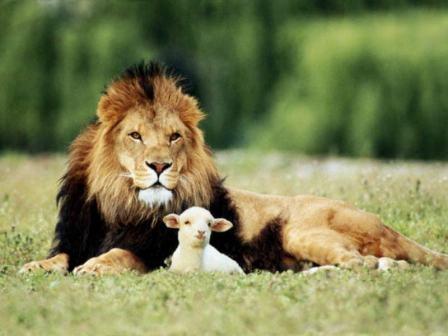
If we cannot save the lion, no other species stands a chance
The reaction that Christian has when seeing his former owners defeats the master narrative of the media: lions, and wild animals in general, are not anthropomorphic. They do not possess human qualities such as cross-species loyalty or even long-term memory that would allow an animal to conjure up memories of warmth, comfort, and play and connect it with a former owner. Ace and John were warned that Christian was in his prime, the leader of his own pride and thus whatever remnants of domestication left in him had more than likely vanished. Au contraire, not only does he recognize the pair, Christian practically leaps into their arms and even invites them to meet his feline companion, a remarkable sign of trust despite the distance time and space has put between Christian and his old friends. I watched the same video first without the music and then with the music that is available with the clip from "The View" above. The video, while incredibly cheesy, definitely made me tear up a little bit because it's so beautiful! It tugs on my heartstrings and thus my ecological conscience. If lions can display anthropomorphic qualities like so, is it true for other animals? Furthermore, if they possess human-like ways of thinking or interacting, does the matter of poaching and the devastation of their natural habitat become a more serious issue? Could it be that these are not just animals but sentient creatures with emotional qualities quite similar to one's own? If so, do we really know what it is we're taking from ourselves when we drive animals to extinction?
In "Thinking Like a Mountain", the hunter describes the impact the extinction of wolves has had on the mountain:
I have watched the face of many a newly wolfless mountain, and seen the south-facing slopes wrinkle with a maze of new deer trails. I have seen every edible bush and seedling browsed, first to anaemic desuetude, and then to death.
Lions are vital piece of the land pyramid of Africa. They are one of the top predators that stalk the grasslands and prune the lands of the weak in order to maintain the circle of life. Without them, the ecosystem of the Savannah would be devastated, and the consequences are unknowable but well described in the quote above from Leopold's reading. Travers notes that while it is unlikely for lions to become completely extinct, as they 'thrive' in zoos, we will lose the lion that is the king of Africa: the wild lion with a "fierce green fire" dancing in its eyes. While in the reading, the green fire in the wolf's eyes was a symbol of the web of life and all minor and major connections to the environment around the wolf. The same is also true about the fire in all wild animal's eyes. They are meant to be free: to roam by instinct and to live life as they were "destined" or "programmed" to by Mother Nature or God or whomever. What good is a lion to the world if it's in a cage? If zoos are meant to be just endless strings of eye candy for humans, why not be less selfish and watch lions television or visit a rehabilitative park where they may roam free in a simulation of their natural environment rather than behind bars like a prisoner sentenced to life, abused and unjustly convicted by humanity?
Unlike the lion, which waits for our omnipotent will to be known, we have a choice. To destroy or to protect, to squander or to save. If we cannot conserve with compassion, make room for and appreciate the wild lion, then no other species stands a chance. If wild lions go, then, for the rest, it's only a matter of time.It is our duty, Leopold would say, to preserve the land ethic. The plague of human overpopulation must be quarantined; we are a disease that has spread almost completely all over the globe. We must preserve the integrity of the world in order to protect all life on this Earth. We are all part of this circle of life, and we are a species that can become extinct just like the lion or the wolf.
Friday, March 4, 2011
Merchant and Anthropocentrism

Our view of what is “nature” is very different from the view of our medieval ancestors. Today, we have a more anthropocentric view of the world instead of an ecocentric one as did our ancestors. For them, “mother” earth was considered to be a beneficent, receptive, and nurturing female. The ancients understood that while they needed to utilize her, they still needed to maintain this level of “violation”. Before “violating the sacredness” of Mother Nature, miners performed sacrifices, practiced sexual abstinence, and even fasted (Merchant 41.). This just shows how guilty they felt about exploiting nature for personal gain. The conceptualization of nature as alive and sensitive was a good defense against the destruction of it. However, people these days do not share the same idea. Capitalism, and especially industrial capitalism, was an important cause of this. The dreams of economic growth and profit from capitalism led humans to change their perception of nature. Demanded resources changed from renewable to nonrenewable, even though it hurt the earth, because they were more profitable. Realizing this, people like Francis Bacon advocated the domination of nature for human benefit and helped shift the conception of nature from an organism to a machine. And so this idea of the “mechanization of nature” began to be spread and accepted. Philosophers knew that machines gave man power over nature, and therefore most philosophers realized this mechanization would be the “death of nature.”(Merchant 65.)
Thoughts like these changed the metaphors that people lived by. Ideas like Social Darwinism helped change this paradigm by telling people how to respond to nature. Nature is something so abstract that, we as humans rely on other people(the media) to tell us what it is because we can’t explain it ourselves. It created this dualism with nature as a nurturing mother to nature as an obstacle. Soon, the “American” idea of “conquering anything” became popular as ever. Capitalism was regarded as the most “natural” way to do economics, advocating ideas like “survival of the fittest.” Calling it natural made it sound justifiable. This set a whole new standard on how to regard nature. The video I embedded really shows you just how much your perception has changed by the way they made it. The first clip is just a bulldozer digging up land, which seems "normal", and then it blends with the clip of a bird in the grass. The two frames combined show you how the two videos are connected. We didn't think of it in that way because of this changed metaphor of how we see things. Another thing I thought about when viewing this video was how construction vehicles and tools are often toys for young children. As a child, I played with dumptrucks and bulldozers in the sandbox but never really thought about what I was doing. It seems like America is trying to start them young so they don't see a problem when they see bulldozers destroying forests because it seems normal to them. Capitalism has given us the incentive to get out there and make money, and money makes us forget about the actual problem.
However, along with capitalism, the scientific revolution played a major role in the changing of this perception. Newtonian science especially changed the way people saw nature. The idea that matter was composed of individual components made people look at the nature the same way. What was once valued as a single living and breathing organism was now thought to be made up of billions of different parts, so destroying part of it didn’t affect nature as a whole. I believe the ancients thought of the earth the way they did because they knew nothing else. Humans generally need a set of rules or truths to live by, and so we create them, which is why “truths” are constantly changing between generations. What is considered to be “true” today may not be true in 100 years, and so forth. This and the facts from the scientific revolution changed humans conception of reality forever, with most people feeling disenchanted from their former beliefs.
This paradigm shift from an Organic Worldview to a Mechanistic one was due partly to people like Francis Bacon convincing the population that humans have the “might and right” to do anything they see fit. Destroying nature became justified because it was merely where “human knowledge and human power intersected.”(Francis Bacon, Merchant). This view is questionable to me because I’ve always been taught that knowledge is power. If we have knowledge, then don’t we have power? Why would this justify the destruction of “nature”, or the world? It doesn’t, but the idea of profits will outweigh the idea of conservation any day.
This quote by Francis Bacon particularly clicked with my media piece. The bulldozer represents human power, and the man driving it represents human knowledge. I find it funny that the title begins with “progress” because I wonder “progress for whom?” Construction is something we as Americans see every day because our civilization is “advancing.” Progress and advancement are two words with a similar connotation, but what exactly should that connotation be? Progress should mean that everyone is moving forward, but who actually progresses, or should I say profits, from this construction of civilization and destruction of nature? The builders of this house are a good example of egoism in today’s society. They assume that they are only doing good because they are building a home for someone, but what they don’t realize is that they are also destroying a home, or multiple. Therefore, this egocentric view that what is good for the individual is also good for society is wrong most of the time. Man will learn that sooner or later if this mechanistic worldview doesn’t change back to an organic one. Man must change how he defines “progress”, as “man’s rise is almost certainly man’s demise.”